Business Strategy
Building a Scalable Business Ecosystem
August 2026Read Article
The VGS Entrepreneur Hub is not a co-working space. It is an integrated business environment where founders get access to the operational infrastructure that most early-stage companies cannot afford individually.
The conventional co-working space solves one problem: the cost of office space. It does not solve the deeper problems that limit most early-stage entrepreneurs — fragmented service providers, absence of operational support and the isolation that comes from building a business without a genuine peer environment.
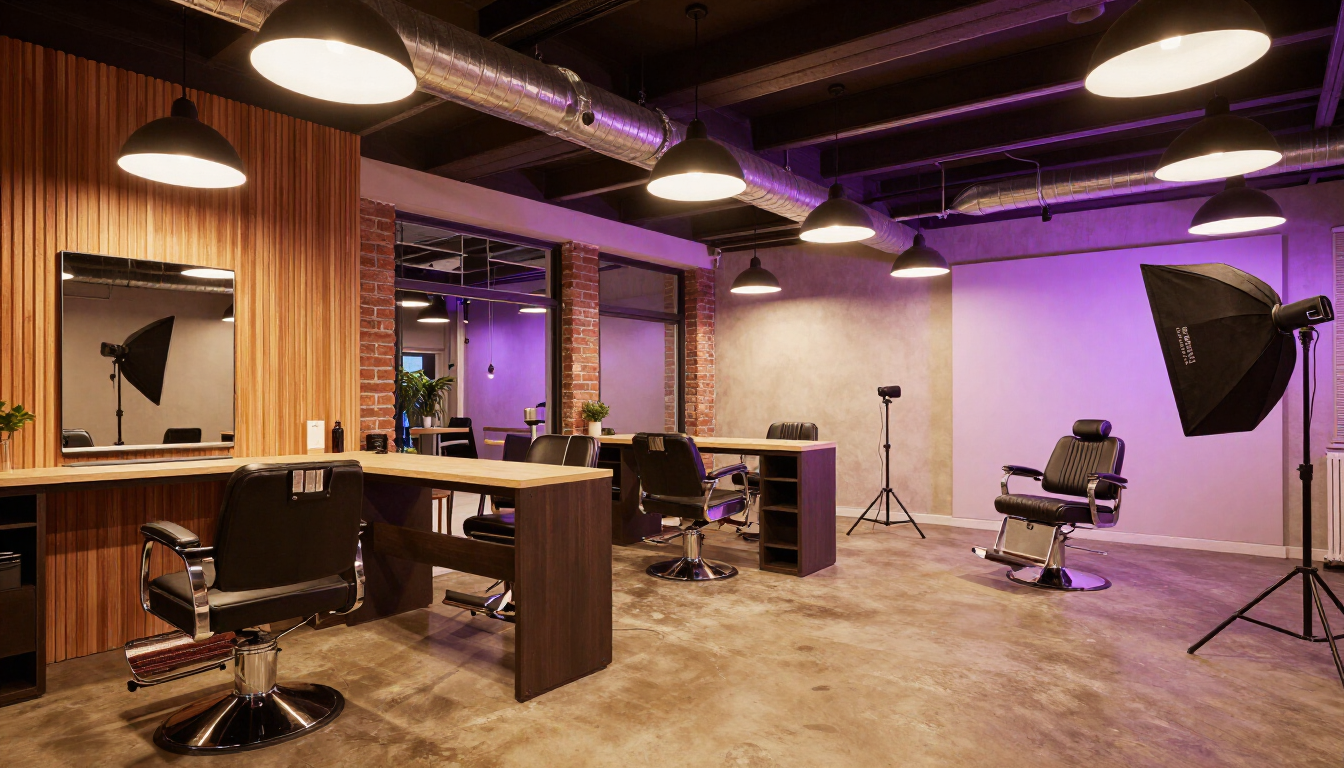
The VGS Entrepreneur Hub, development of which began in August 2026, is designed from a different premise. The physical space — a 900 m² warehouse transformation in the Netherlands — is the container. The actual product is access to an integrated operational ecosystem that removes the friction points that slow entrepreneurial growth.
Entrepreneurs operating within the Hub will have embedded access to Content Creation and management, Videography and Photography production, Business Strategy advisory, Marketing and brand development, Administrative and compliance support, Networking infrastructure, and structured Growth Support programmes. These are not add-on services that tenants can purchase optionally. They are built into the operational fabric of the environment.
The rationale is straightforward: a barber with a clear vision for their business should not have to spend meaningful time managing social media content, navigating administrative complexity or building a marketing strategy from scratch. When those functions are handled by shared infrastructure within the ecosystem, the entrepreneur can direct their full attention to the core work — building the business.
Tenant selection for the first Hub is deliberate. VGS is not filling the space with any business willing to pay rent. The selection criteria prioritise entrepreneurs with clear growth ambitions and complementary business models — businesses whose success creates positive externalities for others in the ecosystem. A photography studio that serves the marketing needs of fellow tenants. A barber whose brand work generates content for the media pillar. An accountant whose financial oversight supports multiple businesses simultaneously.
The physical design reflects this philosophy. The layout is not a row of closed offices. It is a sequence of purpose-designed spaces — production rooms, meeting facilities, a podcast studio, collaborative work areas — arranged to create natural interaction and knowledge sharing.
The first Hub is explicitly a proof of concept. The operational learnings from this initial location will be systematised into a replicable model. The long-term vision is for VGS Entrepreneur Hubs to operate in multiple cities across the Netherlands and, eventually, internationally — each one a physical anchor for the VGS ecosystem in that market.
The development of the first Hub, running concurrently with the UAE real estate investment and the continuing logistics growth, reflects the current phase of VGS: multiple pillars reaching operational maturity simultaneously, each reinforcing the credibility and capability of the others.

Mohamed Abdulgaadir
Founder & CEO, VGS Group